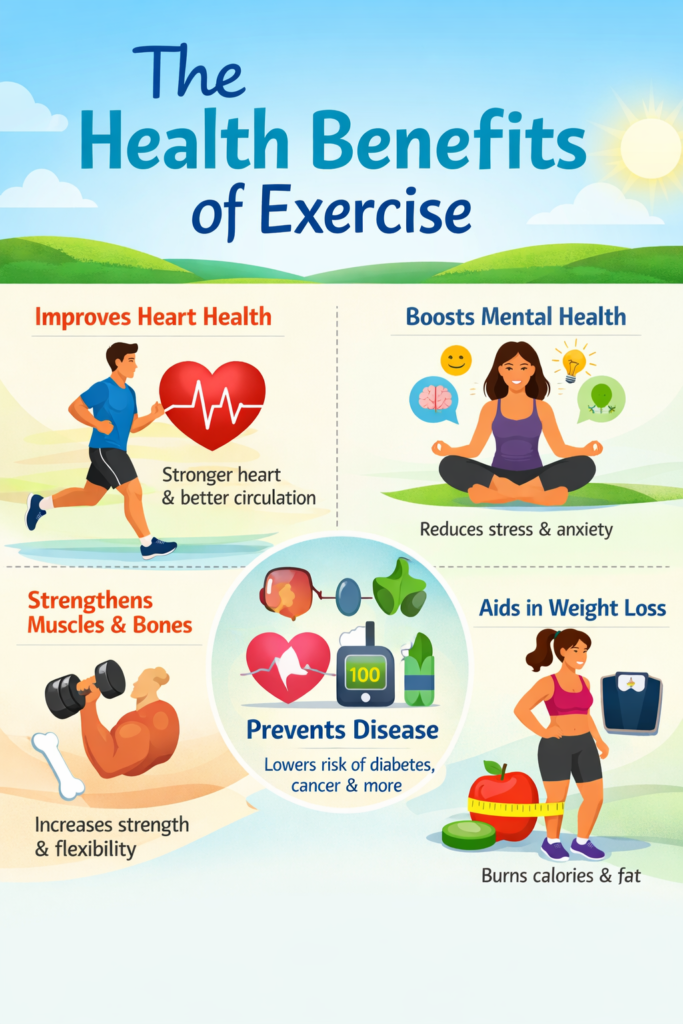

The health benefits of exercise extend far beyond weight control and physical appearance. Today, regular physical activity is widely recognized as one of the most effective ways to improve overall health and prevent disease. However, many people still underestimate how exercise supports both the body and the mind. Fortunately, even moderate exercise can lead to significant health improvements. In this article, we explore the physical, mental, and long-term health benefits of exercise and explain why staying active is essential for a healthy lifestyle.
Why Exercise Is Important for Overall Health
Exercise plays a vital role in maintaining overall health because it strengthens the heart, improves circulation, and supports proper body function. For this reason, people who exercise regularly are less likely to develop chronic illnesses. On the other hand, physical inactivity increases the risk of heart disease, obesity, and diabetes. Therefore, incorporating exercise into daily routines is one of the most effective preventive health strategies.
Physical Health Benefits of Exercise
Regular exercise improves physical health in many ways. First, it strengthens the heart and improves cardiovascular health by lowering blood pressure and improving blood flow. In addition, exercise helps control body weight by burning calories and increasing metabolism. Moreover, it strengthens muscles and bones, thereby reducing the risk of osteoporosis and joint problems. As a result, physically active individuals experience better endurance, flexibility, and overall strength.
Exercise and Disease Prevention
Exercise plays a key role in preventing many diseases. For example, regular physical activity lowers the risk of heart disease, stroke, and type 2 diabetes. In addition, exercise helps regulate blood sugar levels and improves insulin sensitivity. Furthermore, studies show that exercise reduces the risk of certain cancers, including colon and breast cancer. Consequently, maintaining an active lifestyle contributes to long-term disease prevention.
Mental Health Benefits of Exercise
In addition to physical health, exercise greatly benefits mental well-being. For instance, physical activity releases endorphins, which naturally improve mood and reduce stress. Moreover, regular exercise helps reduce symptoms of anxiety and depression. At the same time, it improves sleep quality and boosts self-confidence. Therefore, exercise supports emotional balance and mental clarity.
Exercise and Brain Health
Exercise not only improves mood but also supports brain function. In particular, regular physical activity improves memory, concentration, and learning ability. Furthermore, exercise increases blood flow to the brain, which helps protect cognitive function as people age. As a result, staying active may reduce the risk of dementia and age-related memory loss.
How Much Exercise Do You Need?

Although intense workouts offer benefits, moderate exercise is often sufficient. According to health experts, adults should aim for at least 150 minutes of moderate exercise per week. For example, activities such as brisk walking, cycling, swimming, or light jogging are effective. Therefore, consistency matters more than intensity when it comes to long-term health benefits.
Simple Ways to Stay Active
Staying active does not have to be complicated. For instance, taking the stairs instead of the elevator, walking short distances, or stretching during breaks can make a difference. Additionally, choosing activities you enjoy increases the likelihood of consistency. Ultimately, small lifestyle changes can lead to lasting health improvements.
Conclusion
In conclusion, the health benefits of exercise include improved physical strength, better mental health, disease prevention, and enhanced quality of life. By exercising regularly, individuals can protect their heart, strengthen their body, and improve emotional well-being. Ultimately, making exercise a daily habit is one of the most powerful steps toward long-term health and vitality.