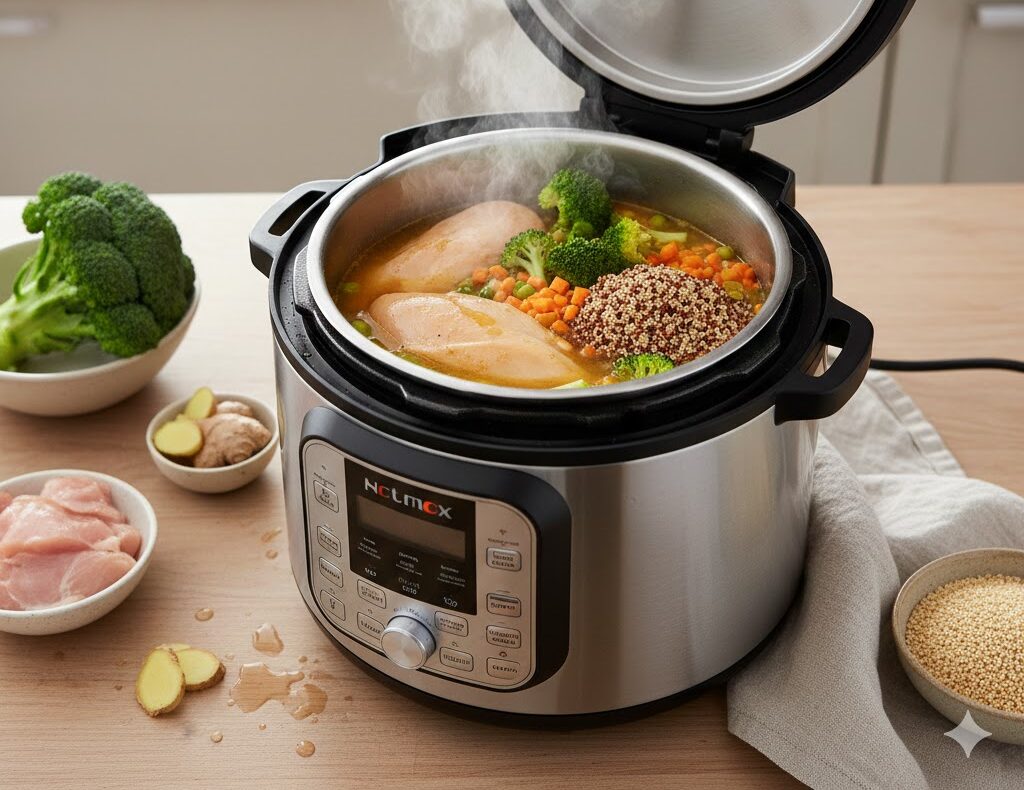

Does pressure cooking really preserve nutrients? This is a common question among home cooks and health-conscious families. Fortunately, research shows that pressure cooking can retain most vitamins and minerals better than traditional cooking methods. In addition, because it uses less water and cooks food faster, nutrient loss is often minimized. In this article, we explore how pressure cooking affects different nutrients, compare it with other cooking methods, and provide tips to maximize nutrition in your meals.
How Pressure Cooking Works
Pressure cookers use steam and high pressure to cook food faster than traditional methods. Essentially, the sealed environment raises the boiling point of water, which cooks food more quickly. As a result, cooking times are significantly reduced, which can influence how nutrients are preserved.
For example, leafy vegetables, grains, and legumes cook in minutes rather than hours, which can help maintain certain heat-sensitive nutrients. Moreover, because pressure cooking requires less water, water-soluble vitamins like vitamin C and B vitamins are less likely to leach out.
Does Pressure Cooking Preserve Nutrients?
Studies show that pressure cooking can actually preserve nutrients better than some traditional methods. Specifically:
- Water-soluble vitamins: Vitamins like vitamin C and many B vitamins are sensitive to heat and water. However, because pressure cooking uses less water and shorter cooking times, nutrient loss is minimized compared to boiling.
- Fat-soluble vitamins: Vitamins A, D, E, and K are generally stable under pressure cooking, meaning they remain largely intact.
- Minerals: Minerals such as potassium, magnesium, and iron are mostly retained because they do not break down under heat.
Therefore, pressure cooking can be a nutritious option, especially when compared to methods that require long cooking times, such as boiling or slow-cooking.
Pressure Cooking vs Boiling and Steaming
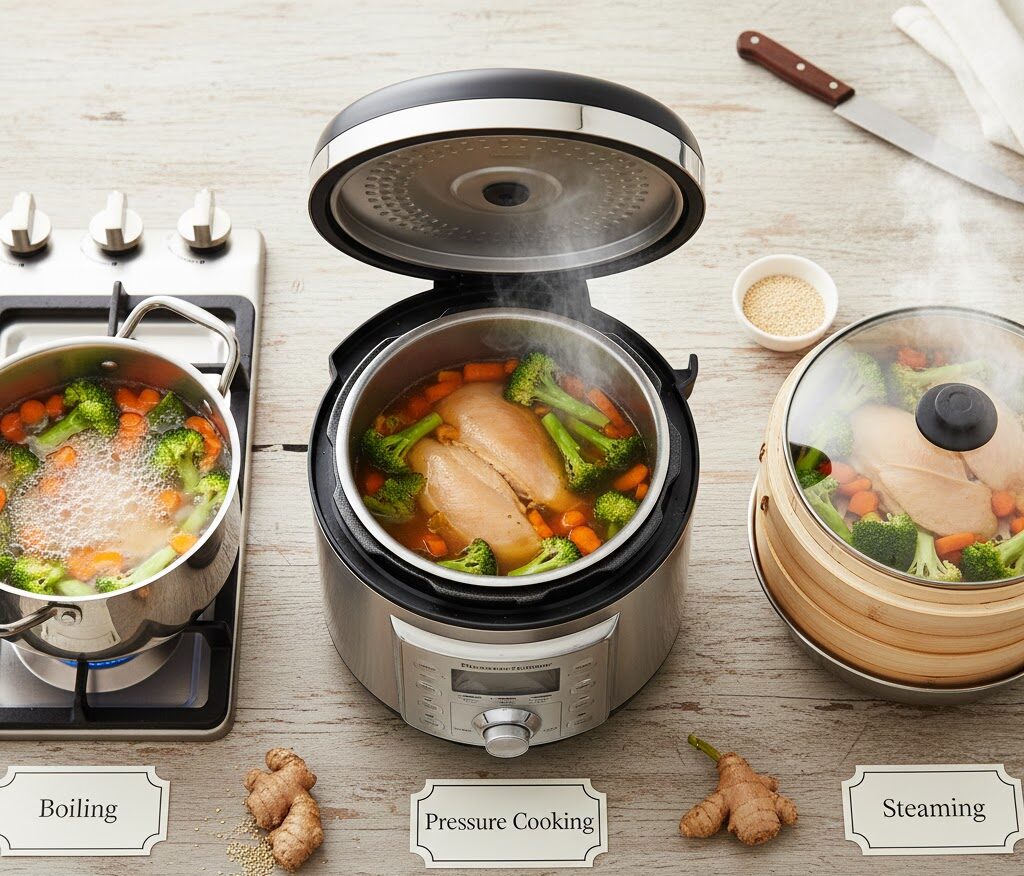
In comparison, boiling often leads to higher nutrient loss because vitamins and minerals leach into cooking water. For instance, boiling spinach for 10 minutes can reduce vitamin C content by up to 50%. On the other hand, steaming vegetables helps retain more nutrients because the food is not submerged in water.
Pressure cooking, however, combines the benefits of steaming with faster cooking times. As a result, it preserves most nutrients while also reducing energy use and cooking time. In addition, it is convenient for preparing grains, beans, and meats without compromising nutrition.
Vitamins and Minerals Affected by Pressure Cooking
Although pressure cooking preserves most nutrients, certain sensitive compounds may still degrade:
- Vitamin C: Slight loss may occur, especially with prolonged cooking. However, the loss is generally less than boiling.
- Folate (B9): Some reduction can occur, but the shorter cooking time helps retain more than conventional methods.
- Antioxidants: Certain phytonutrients may decrease slightly, but many remain intact.
Overall, the benefits of faster cooking and reduced water usage outweigh minor nutrient losses.
Is Pressure Cooking Healthy?
Clearly, pressure cooking is not only safe but also healthy. In fact, it can be more nutritious than many traditional methods. By reducing cooking time, you help preserve heat-sensitive vitamins, and by limiting water, you prevent water-soluble nutrients from being lost.
Moreover, pressure cooking encourages home cooking, which often results in fewer processed foods and more balanced meals. Therefore, it supports both convenience and nutrition in one method.
Tips to Maximize Nutrient Retention
To get the most out of pressure cooking, follow these practical tips:
- Use minimal water: Less water prevents leaching of water-soluble vitamins.
- Avoid overcooking: Stick to recommended cooking times for each food.
- Cook vegetables whole or in large pieces: Reduces surface area exposed to heat.
- Include the cooking liquid: Often, nutrient-rich juices can be used in soups or sauces.
- Avoid excessive pre-chopping: Smaller pieces can lose nutrients faster.
By applying these strategies, you can enjoy pressure-cooked meals without compromising their nutritional value.
Conclusion
In conclusion, pressure cooking is an efficient and healthy cooking method that largely preserves nutrients. Although some heat-sensitive vitamins like vitamin C may see slight reductions, most minerals and fat-soluble vitamins remain intact. Therefore, using a pressure cooker is a smart choice for anyone looking to save time, energy, and maintain the nutritional quality of meals.
Ultimately, pressure cooking combines convenience with nutrition, making it a valuable tool in every modern kitchen.